15 Years of Lipedema Science: What We Thought in 2011—and What We Know in 2026
On this page
For many women, the medical conversation around Lipedema still sounds stuck in the past.
“Your legs are swollen.”
“Your stage tells us how severe it is.”
“That tissue will not change.”
“Move more.”
“Just lose weight.”
Some of those statements came from early observations. Others were oversimplifications that outlived the evidence.
The last 15 years have not produced a neat answer to every question. They have done something more useful: they have shown where the old explanations were too narrow, where newer evidence is genuinely stronger, and where researchers still need better studies.
This is the story of that shift.
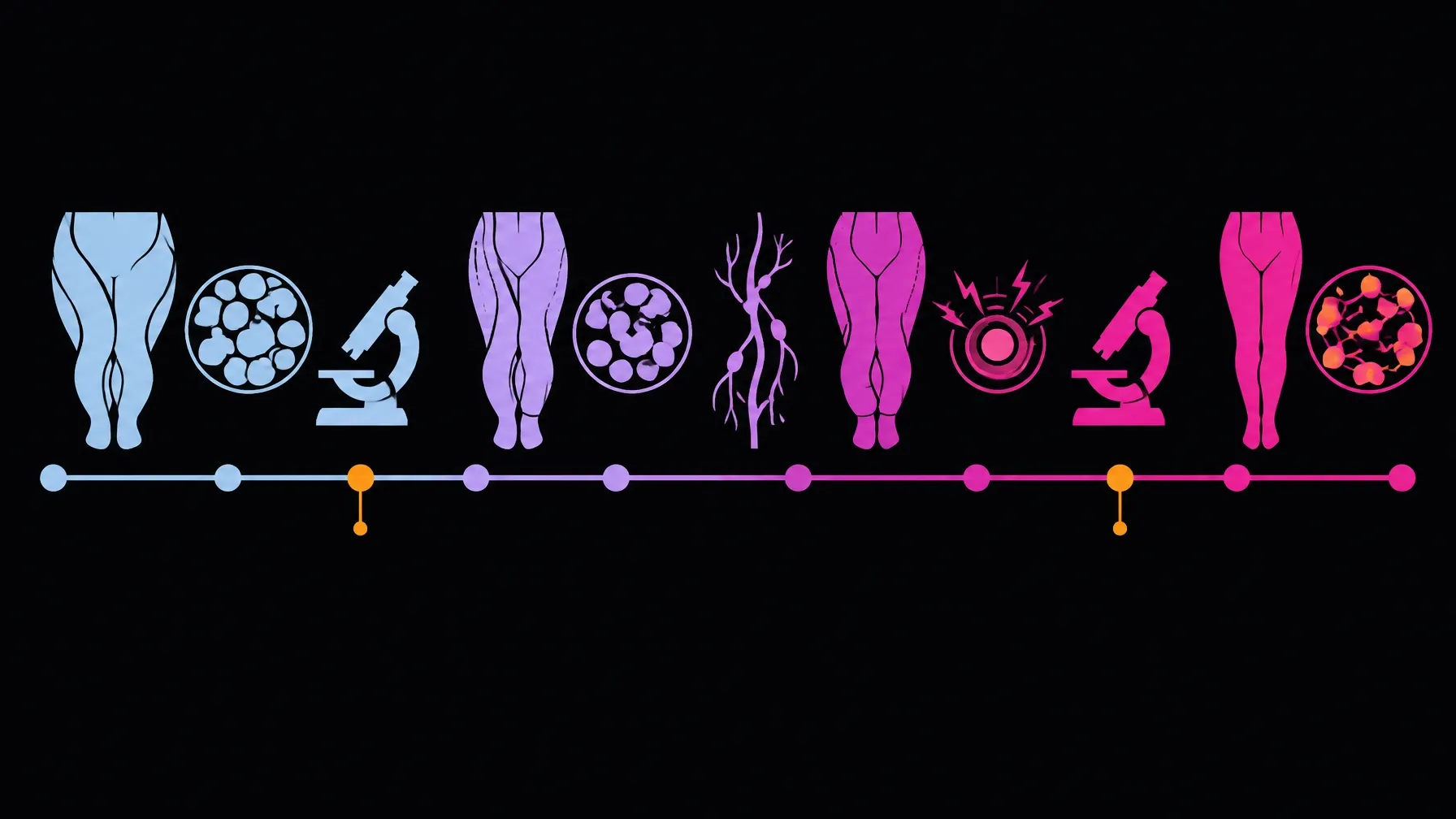
1. From “fat legs and edema” to a more complex tissue disorder
The modern research story is often traced to the 1951 description by Wold, Hines, and Allen. That historical anchor mattered because it described a recognizable pattern: disproportionate enlargement of the legs, relative sparing of the feet, tenderness, and easy bruising. But a historical description is not a complete mechanism.
Early explanations often placed swelling at the center of the condition. That made sense when visible enlargement and fluid-related symptoms were the most available clinical observations. It also encouraged a tendency to treat every enlarged limb as though it reflected the same process.
Over time, lymphatic imaging made the picture more complicated. Lymphoscintigraphy and indocyanine-green imaging have reported delayed or altered transport in some people, while other studies have shown preserved transport, dilated lymphatic vessels, or increased propulsion, particularly in earlier-stage disease. Different protocols, populations, and definitions make the findings difficult to collapse into one answer.
Capillary permeability is another possible contributor. If more fluid leaves the microcirculation and enters the interstitial space, lymphatic transport may be asked to manage a greater load without the person having primary lymphatic failure. That distinction matters because overload and structural failure are not the same thing.
Two contributors are discussed most often:
- Increased capillary permeability: more fluid may move from small blood vessels into surrounding tissue.
- Disturbed lymphatic microcirculation or transport: lymphatic flow may be altered, delayed, or insufficient for the fluid burden in a particular person.
Obesity can also affect lymphatic function and can create imaging findings that resemble impairment in Lipedema. In more advanced disease, secondary lymphedema can develop. The combined presentation is often called lipo-lymphedema or lipolymphedema. That is one reason the clinical story needs to distinguish Lipedema tissue, fluid symptoms, and secondary lymphatic involvement instead of using one label for all three.
The 2026 Lipedema World Alliance position paper argues that “pure Lipedema” should not be defined as an edematous disease. That does not make heaviness, swelling, or fluid-related symptoms imaginary. It means that lymphatic observations belong inside a broader tissue model. For a realistic starting point, see the at-home lymphatic drainage guide for low-energy days.
Evidence grade: Emerging. Imaging findings are heterogeneous, protocols differ, and many studies are small.
2. Lipedema is not obesity, and it is not diagnosed by one test
One of the most important changes since 2011 is the effort to separate Lipedema from both obesity and lymphedema without pretending that they never coexist. Body size, body composition, fluid status, and tissue distribution can overlap. A diagnosis therefore has to come from the whole clinical picture.
Features clinicians may consider include:
- Disproportionate, usually symmetrical enlargement of the limbs.
- Relative sparing of the hands and feet in the classic presentation.
- Pain, tenderness, heaviness, or pressure sensitivity in affected tissue.
- Easy bruising or a history of bruising with relatively minor contact.
- A nodular, cuffed, or otherwise altered subcutaneous tissue pattern.
- Symptoms that do not map neatly onto scale weight or BMI.
- Changes over time, including possible secondary lymphatic involvement, interpreted in context.
The 2021 US standard-of-care paper organized assessment and care recommendations for clinicians. The 2024 German S2k guideline made the clinical nature of diagnosis especially clear: imaging and laboratory testing may help assess differentials or coexisting conditions, but neither confirms Lipedema by itself. The 2026 Lipedema World Alliance Delphi consensus adds a research priority: shared definitions, standardized reporting, and better case definitions.
That is a meaningful move away from the search for one decisive scan or blood test. A scan can contribute information. A laboratory test can help investigate another problem. Neither can replace a careful history, physical examination, symptom description, and assessment of the person in front of the clinician.
Evidence grade: Supported. Current guidance consistently places diagnosis in clinical context while recognizing that standardized tools and validated biomarkers are still needed.
3. Stage describes morphology, not the whole person
Stage is useful because it gives clinicians and researchers a shared shorthand for visible or palpable tissue changes. Stage 3 generally refers to larger tissue lobules and more pronounced contour changes. Stage 4 usually describes Lipedema with secondary lymphatic involvement. Those features can matter greatly for mobility, skin care, compression, and care planning.
But morphology is not the same as lived severity. Pain does not follow a simple staircase. Some studies find more pain or greater activity interference in later stages. Other studies find no clear relationship between stage and pain intensity, fatigue, anxiety, or depression.
Why can the relationship be so inconsistent?
- Pain instruments differ between studies.
- Researchers do not always define or identify stage in the same way.
- Pain is influenced by tissue sensitivity, nerves, sleep, stress, joint health, comorbidities, and lived context.
- Function can be limited by limb size, pain, weakness, fear of symptom escalation, or all of these together.
For women with late-stage Lipedema, a stage label should be one piece of assessment, not the whole story. This is also why C+CL pays attention to function, pain patterns, recovery, and daily capacity alongside morphology. A late-stage conversation may need to include what a person can repeat safely, not simply what she can force once. The Push-Crash Cycle is one way to name that pacing problem.
Evidence grade: Supported. The 2024 S2k guideline and 2026 LWA paper both state that staging does not capture complete symptom severity.
4. The tissue can change with weight loss, but not always in the way people expect
A 2025 study found that approximately 9% diet-induced weight loss in women with Lipedema was associated with reductions in total fat mass, abdominal fat, and leg fat. The relative lower-body distribution remained. Tissue markers related to inflammation and fibrosis did not clearly improve. That is a more useful result than either absolute statement: “Just lose weight” is not an adequate explanation for Lipedema, and “Lipedema fat cannot change” is also too absolute.
The 2024 low-carbohydrate MRI study adds another piece. In 13 participants, fat-free mass and muscle area were lost in both groups. The between-group differences were not statistically significant. The study does not answer every question about diet, but it shows why body-composition monitoring matters when a plan produces weight loss.
This is where the "100-pound question" is useful. The question is not only, "How much weight came off?" It is also:
- How much was ordinary fat?
- How much was affected-region fat?
- How much was visceral fat?
- How much was fluid?
- How much was muscle?
Muscle preservation deserves particular attention. A lower number on the scale can coexist with reductions in fat-free mass or muscle area. That does not mean weight loss should never be considered. It means the plan should monitor more than scale weight: nourishment, protein adequacy, strength, function, symptoms, and quality of life all belong in the conversation.
This evidence reinforces C+CL’s educational emphasis on distinguishing fat, fluid, and lean-mass change while considering adequate protein and nourishment during weight loss.
Evidence grade: Supported for reduction in body fat and leg fat; 🟡 Emerging for symptom and tissue-biology effects.
5. Why does Lipedema hurt?
There is no single answer yet. Lipedema pain may be produced by several mechanisms at once, and the balance may differ between people or change over time. Possible contributors include:
- Fibrosis and extracellular-matrix remodeling.
- Mechanical pressure from enlarged or more rigid tissue.
- Capillary and vascular changes.
- Peripheral nerve changes.
- Altered neuropeptide expression, including CGRP and NGF.
- Neuropathic features.
- Changes in sensory processing.
Some studies report altered quantitative sensory testing, dermal hypersensitivity, and neuropathic pain features. The 2024 quantitative sensory testing research is important because it treats pain as more than a consequence of size: different sensory thresholds and responses can point toward a nervous-system contribution, even while the exact biology remains unsettled.
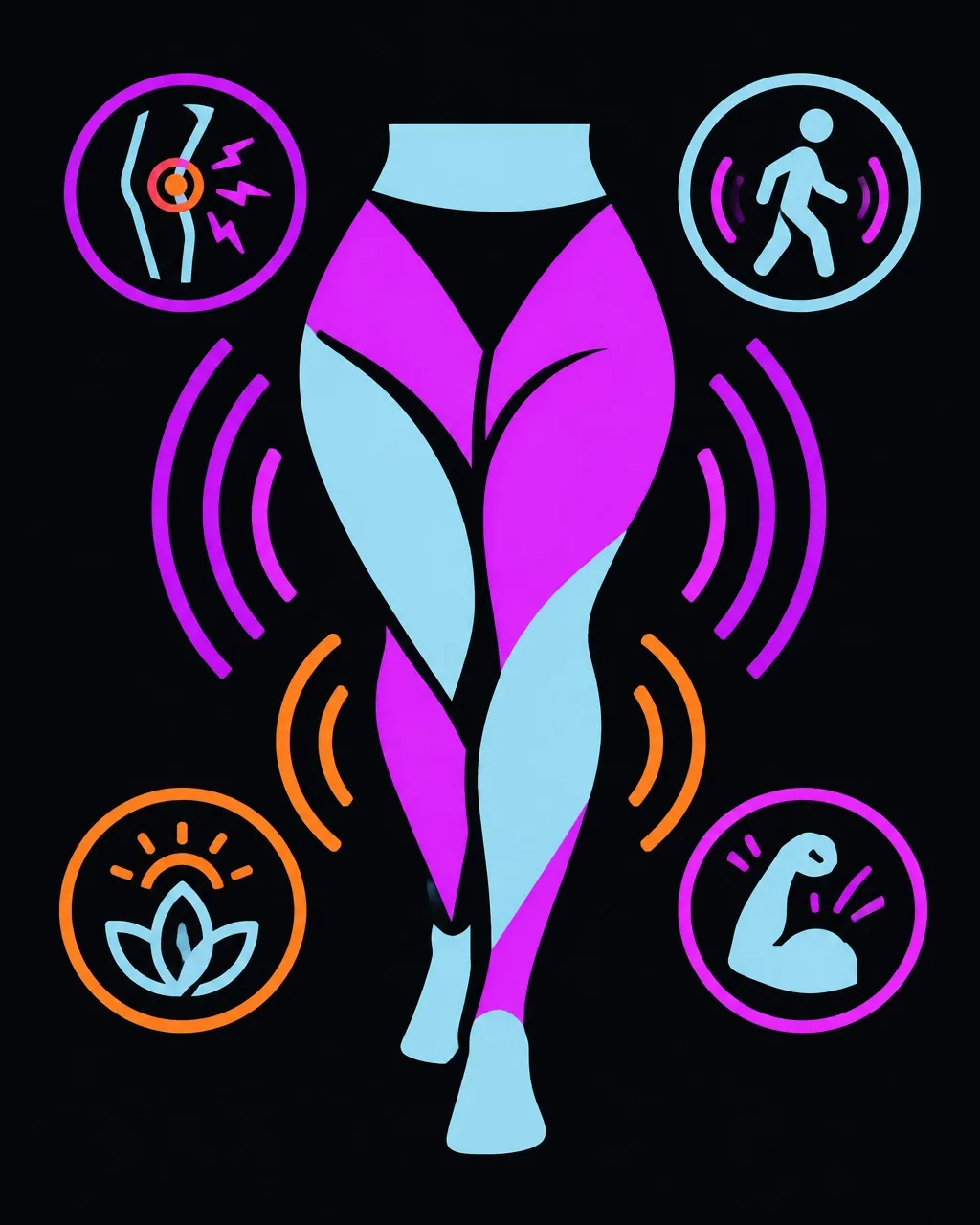
This does not mean pain is “in your head.” It means pain is a real nervous-system experience with more than one possible pathway. Burning, electric sensations, pain from light touch, deep aching, pressure sensitivity, sleep disruption, and activity interference can provide different information than a single number from zero to ten.
Evidence grade: Emerging. Human sensory and pain studies are growing, but the exact biology remains unsettled.
6. Genetics, hormones, vessels, and the extracellular matrix
Lipedema research has also moved from describing tissue to asking why that tissue develops and behaves differently. Genetic signals, hormone-sensitive cells, blood vessels, adipocytes, immune cells, collagen, and extracellular matrix are being studied as connected parts of a possible biology.
RSPO3 and VEGFA are two examples of signals that have received attention. RSPO3 is relevant to adipose development and signaling. VEGFA is relevant to vascular growth and permeability. Finding a signal in affected tissue does not establish that it causes Lipedema, that it can diagnose Lipedema, or that changing it would be a safe treatment.
One proposed framework is a hormone-sensitive stromal model: stromal cells and their local signaling environment may respond to hormonal changes and influence adipose expansion, vascular behavior, and extracellular-matrix remodeling. This is a proposed framework, not established fact. It is useful as a research question, not as a clinical explanation that has already been proven.
Researchers are examining adipose tissue for differences in:
- Adipocyte size and hypertrophy.
- Adipocyte number and distribution.
- Inflammatory signaling and immune-cell interactions.
- Capillary density, vessel structure, and permeability.
- Collagen organization and extracellular-matrix remodeling.
- Interstitial fibrosis and tissue stiffness.
- Local hormone, metabolic, and mechanical signaling.
Single-cell studies are beginning to identify different adipocyte populations rather than treating all adipocytes as one uniform group. AKT1 has also appeared in genetic and signaling discussions. These findings can help researchers form hypotheses about tissue compartments, but they are not yet a clinical test or a reason to promise a targeted intervention.
A 2026 reanalysis questioned earlier claims of immune-cell enrichment. That is not a failure of science. It is an example of why replication, better controls, tissue sampling, and transparent methods matter. A result can be interesting enough to study and still not be stable enough to use as an explanation.
Evidence grade: Indirect / theoretical for mechanisms; 🟡 Emerging for tissue observations.
7. Movement research is shifting from “move more” to function and recovery
Movement research is increasingly asking what a person can do, what she can recover from, and what helps her participate in daily life. Recent reviews report reduced walking capacity and lower-limb strength in some women with Lipedema compared with controls. Small intervention studies suggest that structured movement can improve pain, strength, endurance, function, and quality of life. Water-based movement may be useful for some people because buoyancy reduces joint loading.
The questions are more specific than “Did she exercise?”
- Can movement improve strength without increasing symptom burden?
- Can it support walking capacity and daily function?
- What dose can a person recover from?
- How should movement change when pain, fatigue, or capacity changes?
- Which outcomes matter most to the person doing the movement?
MovementTracks™ is C+CL’s name for an adaptive movement system that can scale with the day. The Why We Say “Movement” (Not “Exercise”) article explains the language shift, and the MovementTracks™ guide for low-energy days shows how a smaller option can still be an intentional option.
There are still important gaps around exercise intolerance, delayed symptom worsening, recovery time, autonomic symptoms, and post-exertional malaise or post-exertional symptom exacerbation. There is no current evidence proving Lipedema causes PEM. Symptoms that resemble PEM or PESE deserve careful clinical assessment rather than being assumed to come from Lipedema.
In other words, a person’s report of a delayed crash is worth taking seriously, while the cause remains a research question. A plan that includes pacing and recovery can be supportive without claiming that Lipedema itself has been shown to cause PEM.
Evidence grade: Emerging for function and structured movement; unsupported for the claim that Lipedema causes PEM.
8. Nutrition evidence: promising, limited, and not universal
Low-carbohydrate, ketogenic, Mediterranean-style, and other dietary approaches have been studied in small trials and reviews. Some findings suggest possible improvements in weight, body composition, pain, or quality of life. None establishes a universal Lipedema diet.
When reading a nutrition study, useful questions include:
- How many people were studied?
- How long did the intervention last?
- Was there a strong comparison group?
- What did the study measure: weight, pain, function, or tissue biology?
- Were muscle and fat-free mass measured?
- Could participants realistically sustain the protocol?
- What medical, medication, appetite, and food-tolerance differences might change the result?
Studies are often small, diet protocols differ, follow-up is short, and some studies lack strong control groups. Muscle and fat-free mass may decline during energy restriction. A diet that is tolerable for one person may be unsustainable or poorly tolerated by another. The result is promising enough to keep studying and limited enough that it should not be turned into a prescription for everyone.
Nutrition OS™ is C+CL’s educational framework for making nourishment more adaptable to appetite, symptoms, medication effects, food tolerance, metabolic health, and real-life capacity. Core & Curve Lab’s frameworks are educational and supportive and are not scientifically validated medical treatments. For a practical late-stage food discussion, see 3 Things to Eat (and 3 to Avoid).
Evidence grade: Emerging. Nutrition research is promising, limited, and not universal.
9. Compression and conservative care still matter
Compression, skin care, therapeutic movement, symptom education, and selected lymphatic therapies remain part of conservative care in major guidelines. The evidence for individual components varies, and manual lymphatic drainage has not been adequately studied as a stand-alone Lipedema treatment.
“Conservative” does not mean unimportant. Compression may support comfort, fluid management, movement, and recovery for some people. Education can help a person notice patterns before a flare becomes a crisis. Movement can support strength and function when the dose fits. Skin care matters when swelling, friction, or reduced mobility raises risk.
At the same time, conservative care is not a moral test. A person can use compression and still have pain. She can need rest and still be trying. She can pursue surgery and still need conservative support before, between, and after procedures.
Evidence grade: Supported as a broad care approach; 🟡 Emerging or variable for individual components and specific Lipedema outcomes.
10. The major 2026 change: LIPLEG gives stronger evidence for liposuction
The LIPLEG trial is the most important change in the 2026 Lipedema conversation because it moves liposuction evidence beyond small uncontrolled series. It was conducted across 11 German centres and screened 1,973 people. Of those, 453 were enrolled; 410 randomized participants made up the randomized population.
The trial included people with stages I–III and average leg pain of at least 4 out of 10. Participants could have up to seven months of conservative complex decongestive therapy before randomization. In the randomized comparison, 278 received liposuction and 132 continued conservative therapy.
At 12 months, 190 of 278 (68%) in the liposuction group achieved at least a two-point reduction in leg pain, compared with 10 of 132 (8%) in the conservative group. The odds ratio was 26.2 with a 95% CI of 13.1–52.5.
Average pain changed from 6.2 to 2.6 in the liposuction group and from 6.3 to 6.6 in the conservative group. The result is clinically meaningful and gives stronger comparative evidence that liposuction can reduce leg pain for selected people with Lipedema.
The care around the operation also matters. 73% received concomitant conservative care and 69% continued conservative therapy after their last procedure. The trial therefore does not show surgery replacing every other form of support. It studied surgery inside a broader care pathway.
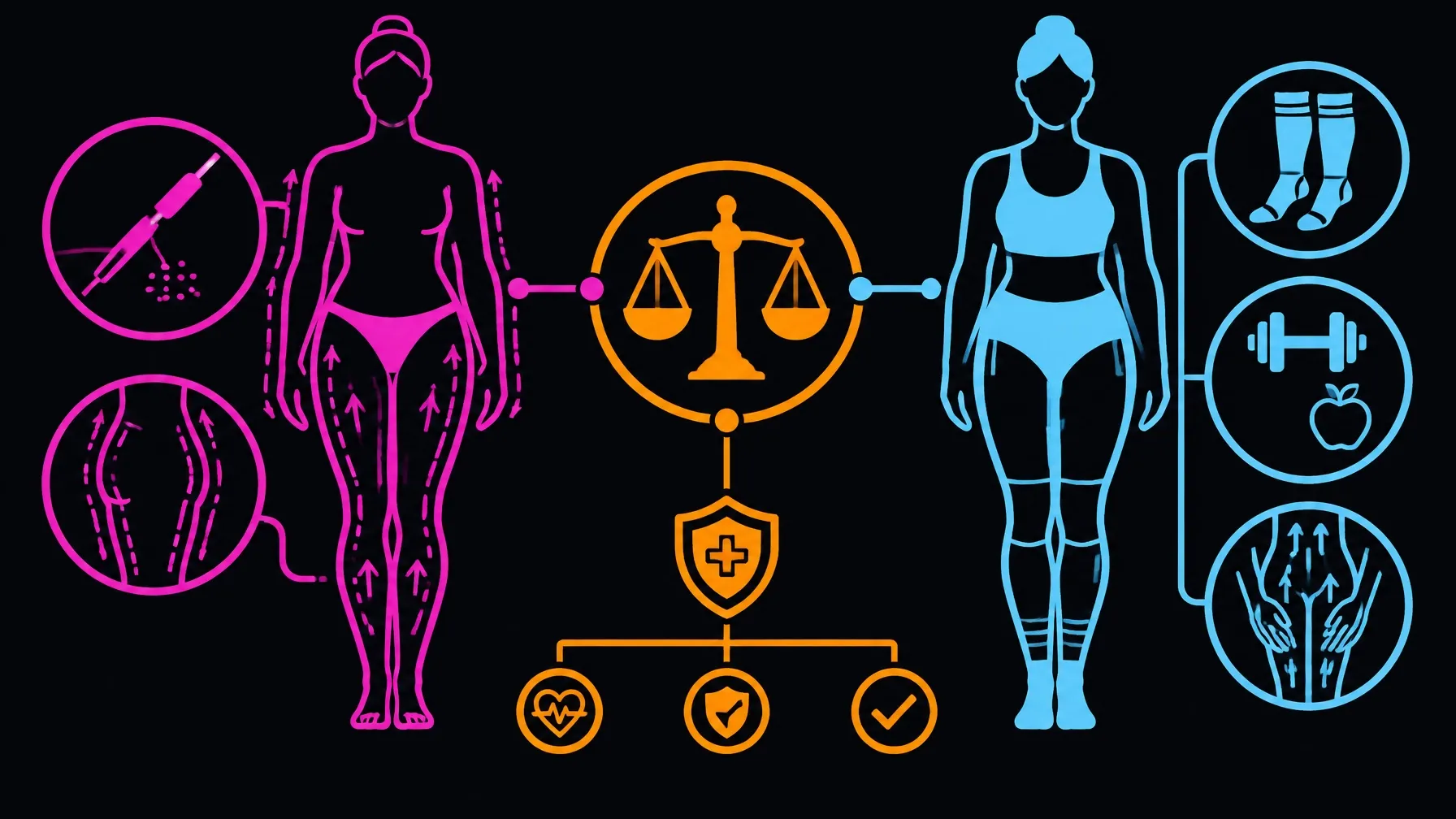
Adverse events were reported in 47% versus 21%. Serious adverse events were about 8% versus 3%. There were no deaths or unexpected life-threatening events. Those numbers belong beside the pain results, not in a footnote. A treatment can have meaningful benefit and meaningful risk at the same time.
The evidence also has limits. The trial was not fully blinded. There was no sham surgery. It was German-only, and ethnicity was not collected. Follow-up was 12 months, with 36-month follow-up ongoing. It studied stages I–III only, not Stage IV. Selection bias remains possible, including the possibility that people who entered the trial differed from people who were not referred, eligible, or willing to participate.
The findings may still change the policy conversation. In Germany, the results are relevant to the question of German statutory insurance coverage for liposuction in Lipedema. Coverage decisions are not the same as a guarantee that surgery is appropriate for every person, and a trial result does not remove the need for individualized assessment, informed consent, experienced surgical care, and long-term conservative support.
In short, LIPLEG gives stronger evidence for pain reduction in a defined population. It does not establish that liposuction is risk-free, that it is suitable for every stage, or that it answers the long-term questions for Stage IV or for people outside the study population.
Evidence grade: Supported for the trial’s defined stages I–III population and 12-month leg-pain outcome; the long-term and broader-population questions remain under study.
11. GLP-1 and GIP research is still observational
GLP-1 and GLP-1/GIP medications have changed the conversation about weight, appetite, symptoms, and body composition. Lipedema-specific research is moving, but the evidence is not yet a medication trial showing disease modification.
Open questions include:
- Do reported improvements in pain, swelling, heaviness, or function persist in prospective studies?
- How much of any change comes from weight loss, metabolic change, symptom change, or another pathway?
- What happens to muscle, strength, mobility, and nutritional adequacy?
- Do affected regions lose fat without changing the underlying Lipedema biology?
- What are the long-term effects on progression, fibrosis, lymphatic biology, and pain?
The 2026 survey is useful because it gives human information about what users report. It is not a randomized medication trial. A 2025 five-person exenatide case series is very early uncontrolled evidence. Mechanistic discussion of tirzepatide and GIP signaling remains a hypothesis. There is no evidence here for a Lipedema-specific treatment effect or for changes to the underlying condition. The GLP-1 and Lipedema research brief separates the signals from the claims the evidence cannot yet support.
Evidence grade: Emerging for reported experiences and body-composition signals; no established Lipedema-specific treatment effect.
12. RZL-012: a useful caution about “promising” mechanisms
RZL-012 is a useful reminder that an interesting biological mechanism is not the same as a safe, effective treatment. Early trials studied local fat reduction, including a Lipedema-related Phase 2a study.
A transient severe liver-enzyme elevation was reported. Reductions in subcutaneous fat and body weight were not statistically significant. RZL-012 is investigational, is not standard Lipedema care, and should not be presented as proven or disease-modifying.
This is what responsible research watching looks like: keep the mechanism visible, keep the safety signal visible, and resist turning “promising” into “works.”
Evidence grade: Indirect / theoretical and investigational; no established clinical treatment effect.
13. What remains under-studied
The progress is real, but the research map still has large blank spaces. The most important gaps include:
- Reliable diagnostic biomarkers and validated diagnostic tools.
- Shared definitions and consistent case definitions across studies.
- Stage 3–4 and Stage IV populations.
- Long-term natural history and progression.
- Pain mechanisms and the relationship between tissue, nerves, and sensory processing.
- Lymphatic function, fluid burden, and the transition to secondary lymphedema.
- Body composition, muscle preservation, strength, and mobility during weight loss.
- Exercise intolerance, recovery time, autonomic symptoms, and PEM/PESE.
- Nutrition interventions with adequate control groups and longer follow-up.
- Outcomes that matter to patients, including participation and quality of life.
- Representation across ethnicity, geography, age, comorbidity, and access to care.
Traditional health plans assume stable capacity. They often assume a person can follow the same plan at the same dose on Monday, Wednesday, and Sunday. Bodies living with pain, swelling, fatigue, caregiving demands, medication changes, or fluctuating capacity do not always work that way.
C+CL uses symptom tracking as an educational way to notice patterns: what happened before a flare, what recovery looked like, how food and movement felt, and which supports made daily function more possible. Tracking does not prove causation and does not replace clinical evaluation. It can give a person better questions to bring to her clinicians.
SRP™, Nutrition OS™, and MovementTracks™ are ways of organizing supportive education around changing capacity. They are not replacements for medical care or scientifically validated medical treatments. Their purpose is to help people observe, adapt, and communicate more clearly while they receive appropriate professional care.
14. Evidence grading
Evidence framework
Four evidence tiers
The tiers below describe the strength and type of evidence behind a statement. They are not a ranking of a person’s experience.
- 🟢 Supported Lipedema is diagnosed clinically; current guidance does not support one confirmatory scan or laboratory test.
- 🟡 Emerging Lipedema tissue can lose fat and volume with weight loss, while disproportion and disease biology may remain.
- 🟡 Emerging Muscle preservation during weight loss in Lipedema remains under-studied.
- 🟠 Indirect / theoretical Hormone-sensitive stromal models, RSPO3, VEGFA, AKT1, and medication mechanisms are research hypotheses, not established treatments.
- 🔴 Unsupported / contradicted Claims that Lipedema causes PEM, that one diet treats everyone, or that a promising medication reverses Lipedema biology go beyond current evidence.
15. What Core & Curve Lab™ is watching next
This article is education, not medical advice, and does not replace care from your own clinicians.